There’s a specific kind of silence in the studio when we work on children’s books. Not the dramatic kind. The real one. With pencils moving, someone flipping reference photos of moss on their phone, a mug leaving a faint ring on a stack of printed drafts. It’s different from branding projects or interface work. Slower. More intimate. You feel the weight of every line because you know the reader on the other side may not even read yet.
In children’s books, the image isn’t decoration. It’s the narrator.
When you’re five, you don’t “analyze composition.” You notice that the bunny looks worried. You sense that the forest feels safe. You remember the color of the sky on the page where something important happened. That’s visual storytelling at its most honest: the image carries emotion before language can.
We’ve explored this through three illustration projects united by nature and animal characters. Same terrain. Different emotional climates. Let’s dig in!
On Visual Narration (Beyond Definitions)
Visual narration isn’t simply “telling a story with pictures.” It’s deciding what to show and what to leave unsaid.
In children’s books, abstraction doesn’t land the same way it does in adult media. If a character is generous, you can’t rely on a clever metaphor. You show it in posture. In the way they extend a hand. In how another character’s shoulders soften in response.
Children read bodies instinctively. They notice spacing between characters. They feel tension when figures are placed too close, relief when there’s air between them. We pay attention to that spacing the way architects pay attention to door widths. It changes how you move through a world.
There’s also the question of originality. Forests, bunnies, giant animals—none of these are new themes. So, you approach is everything. The angle of a branch. The proportion of a paw. The choice to make the light warm yellow instead of blue. Those decisions are small, but they all accumulate into voice.
Case 1: Bunny Adventures Tale
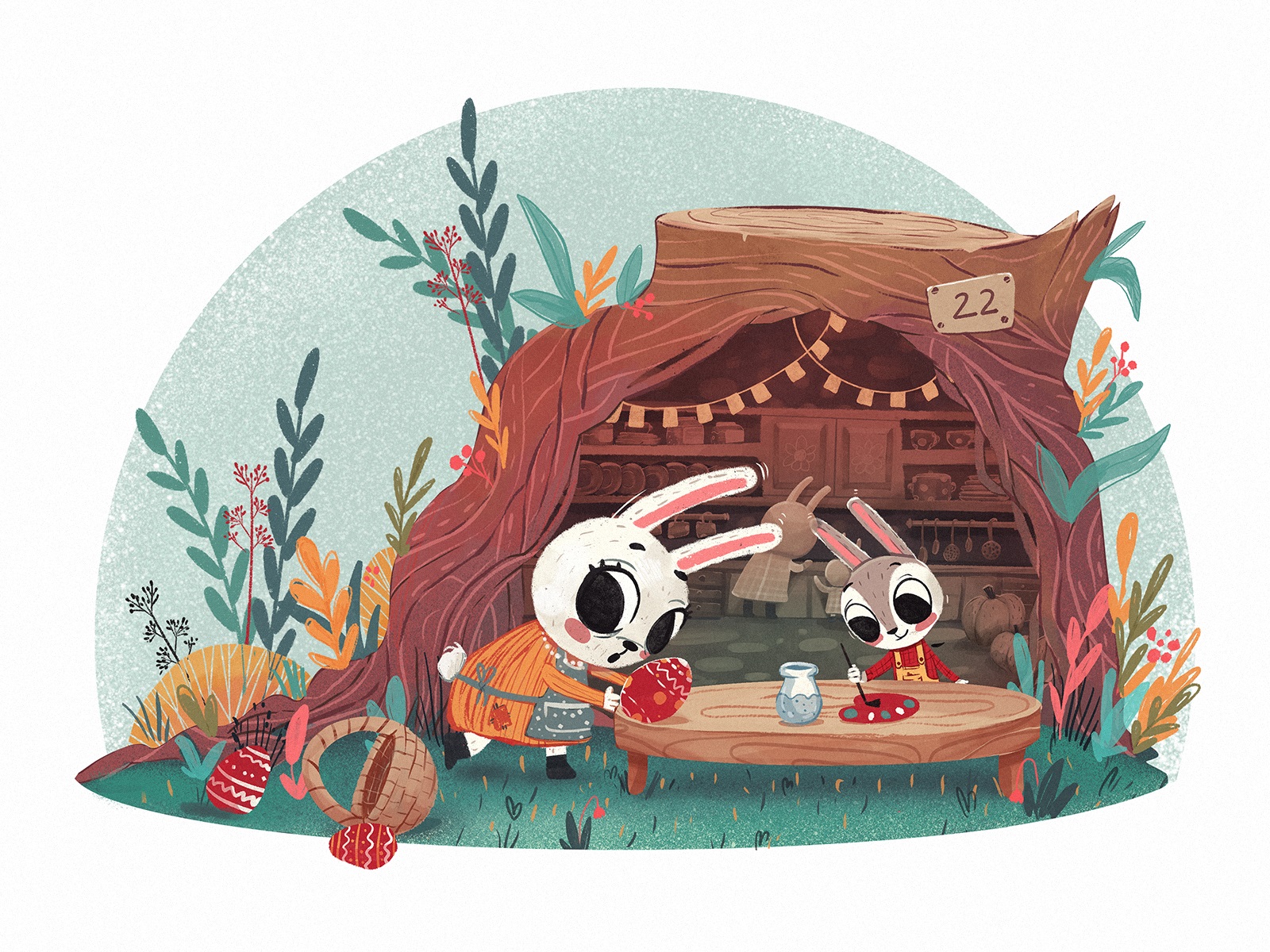
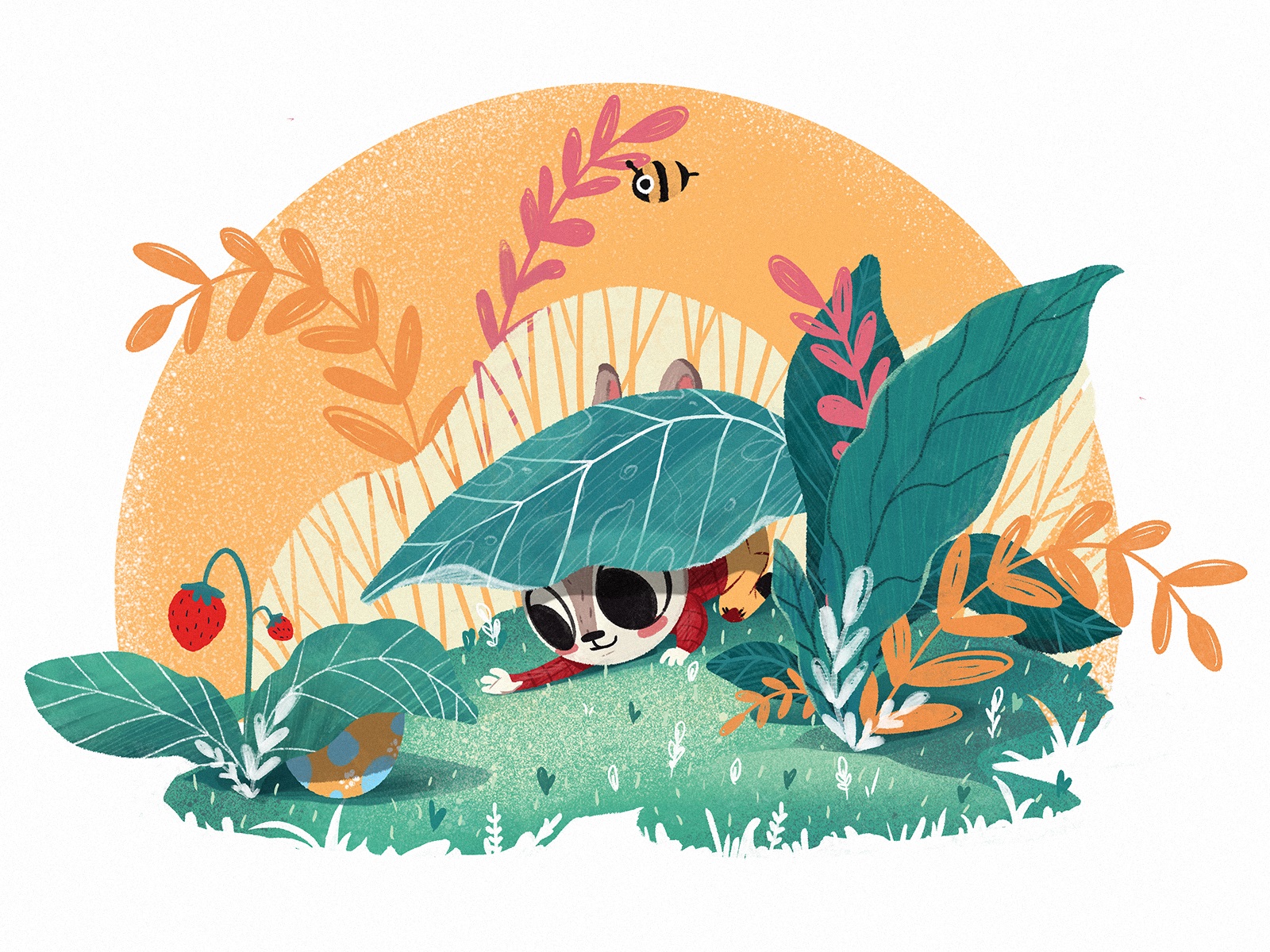
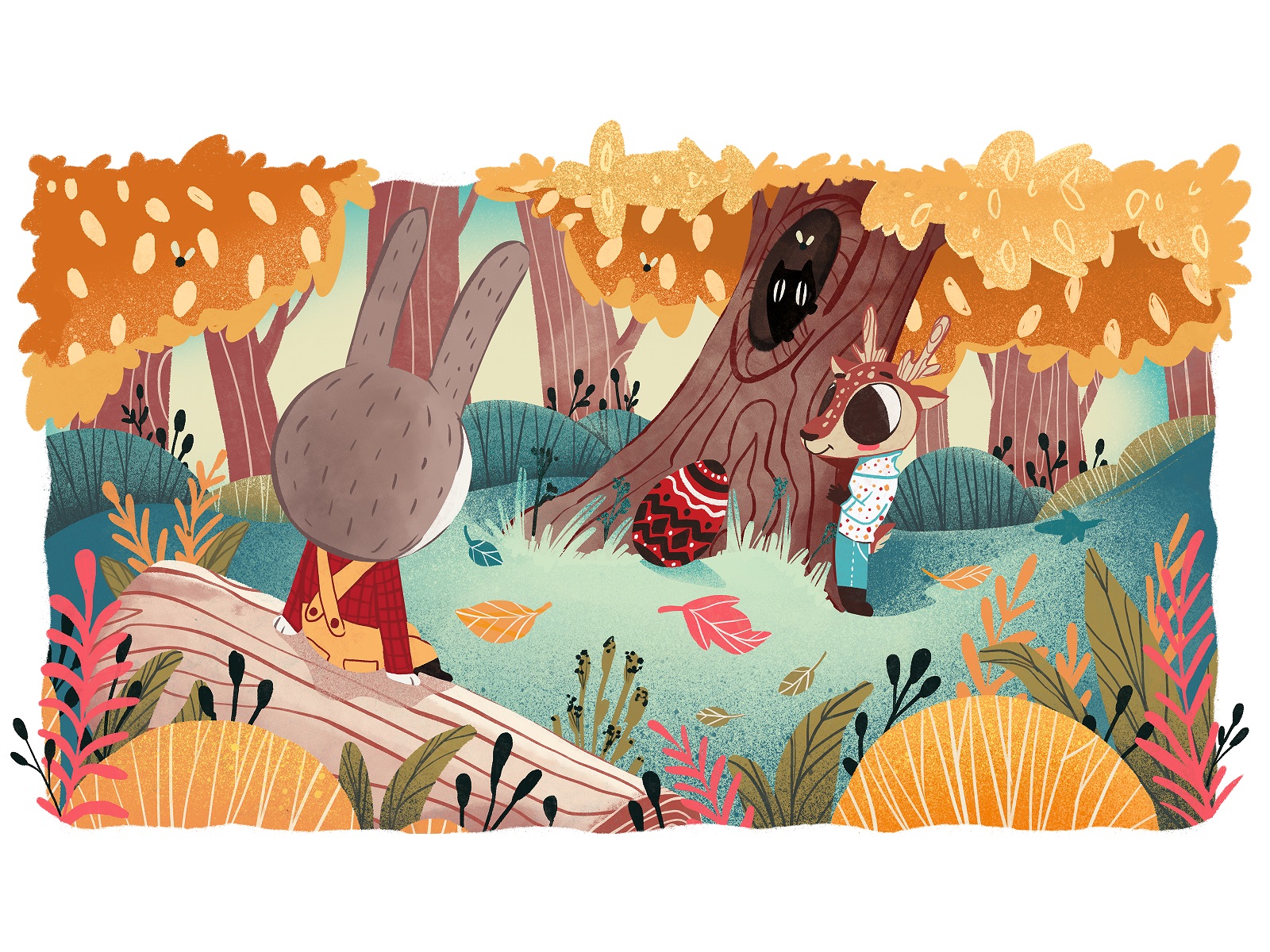
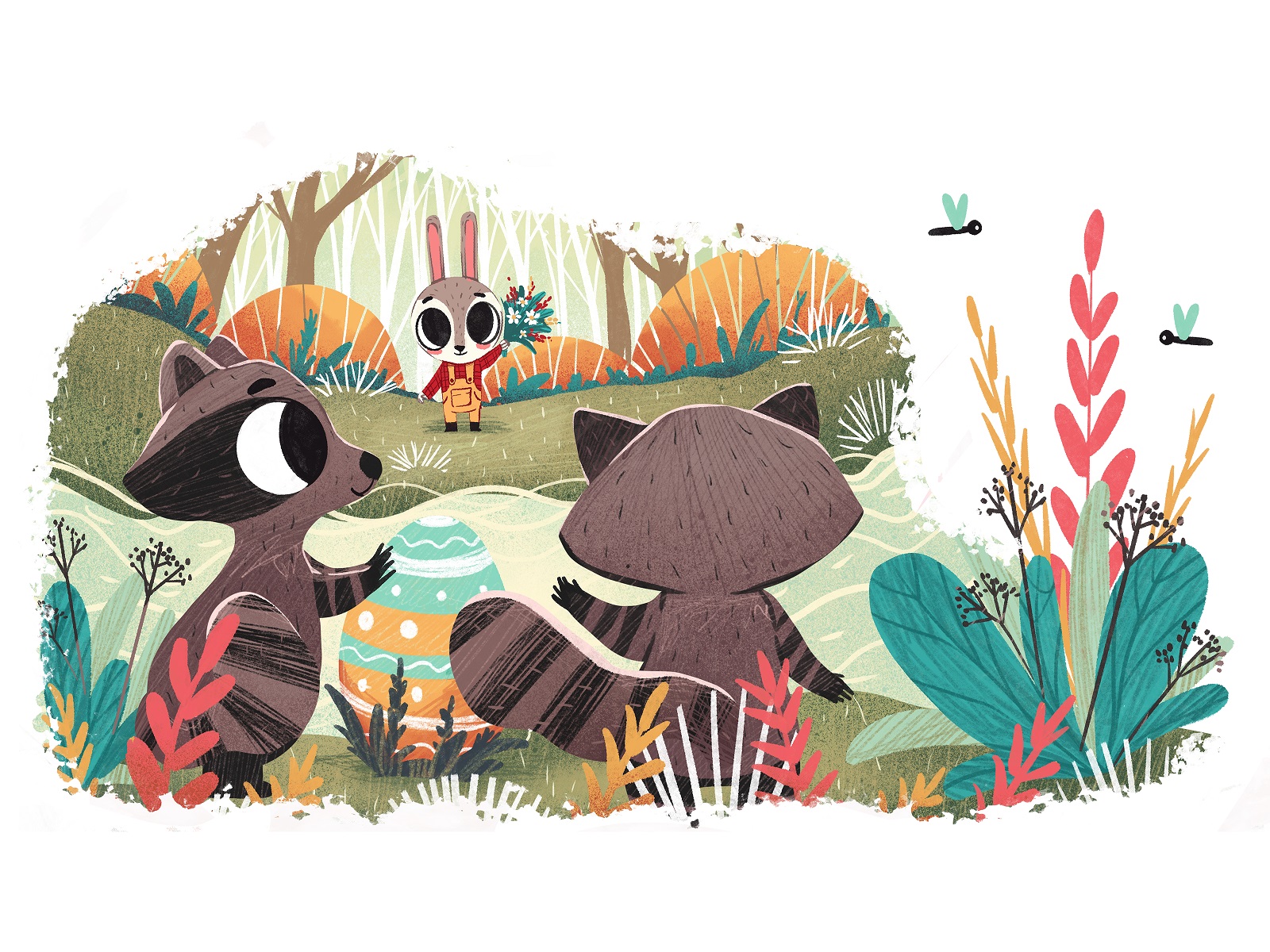
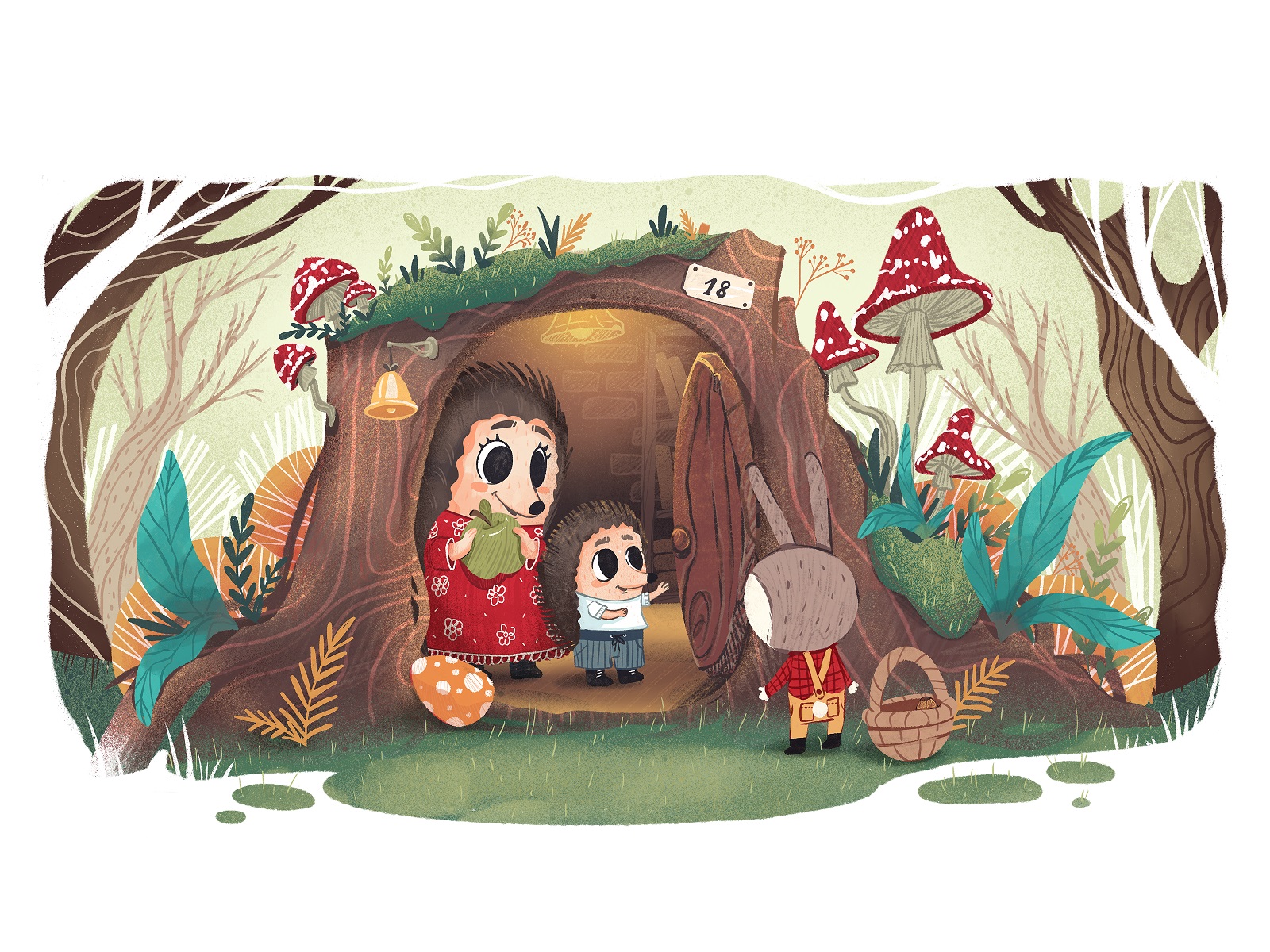
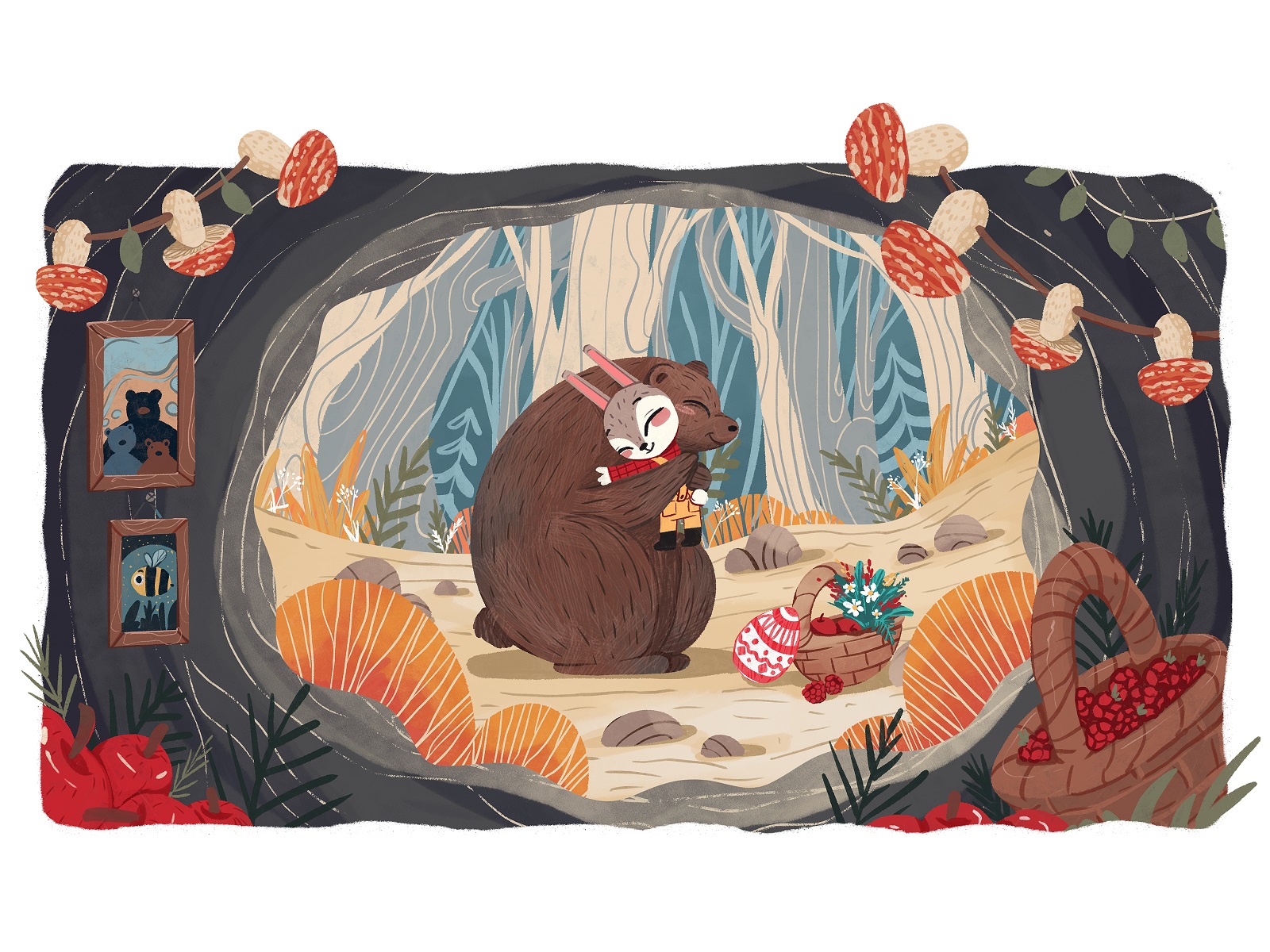
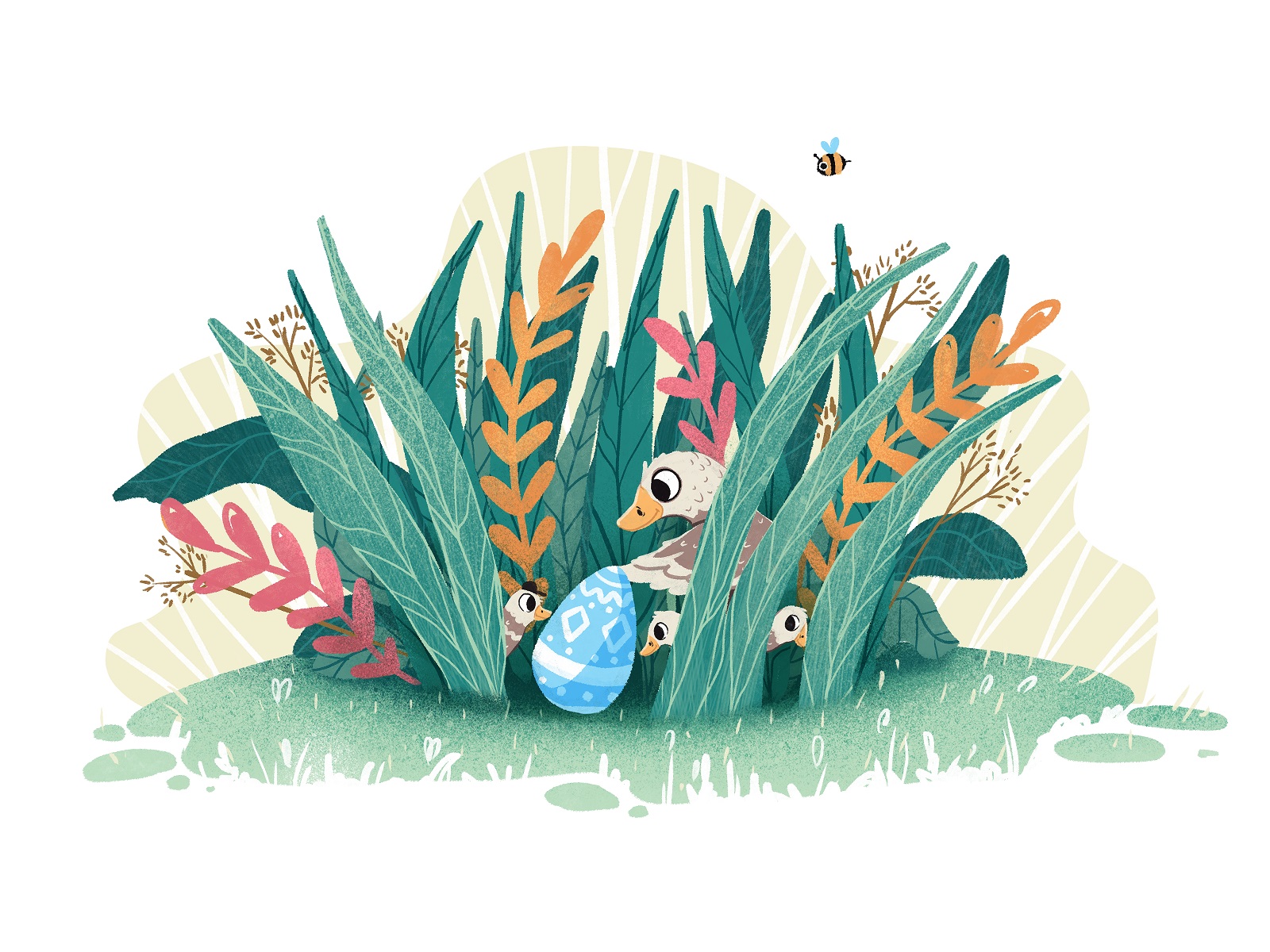
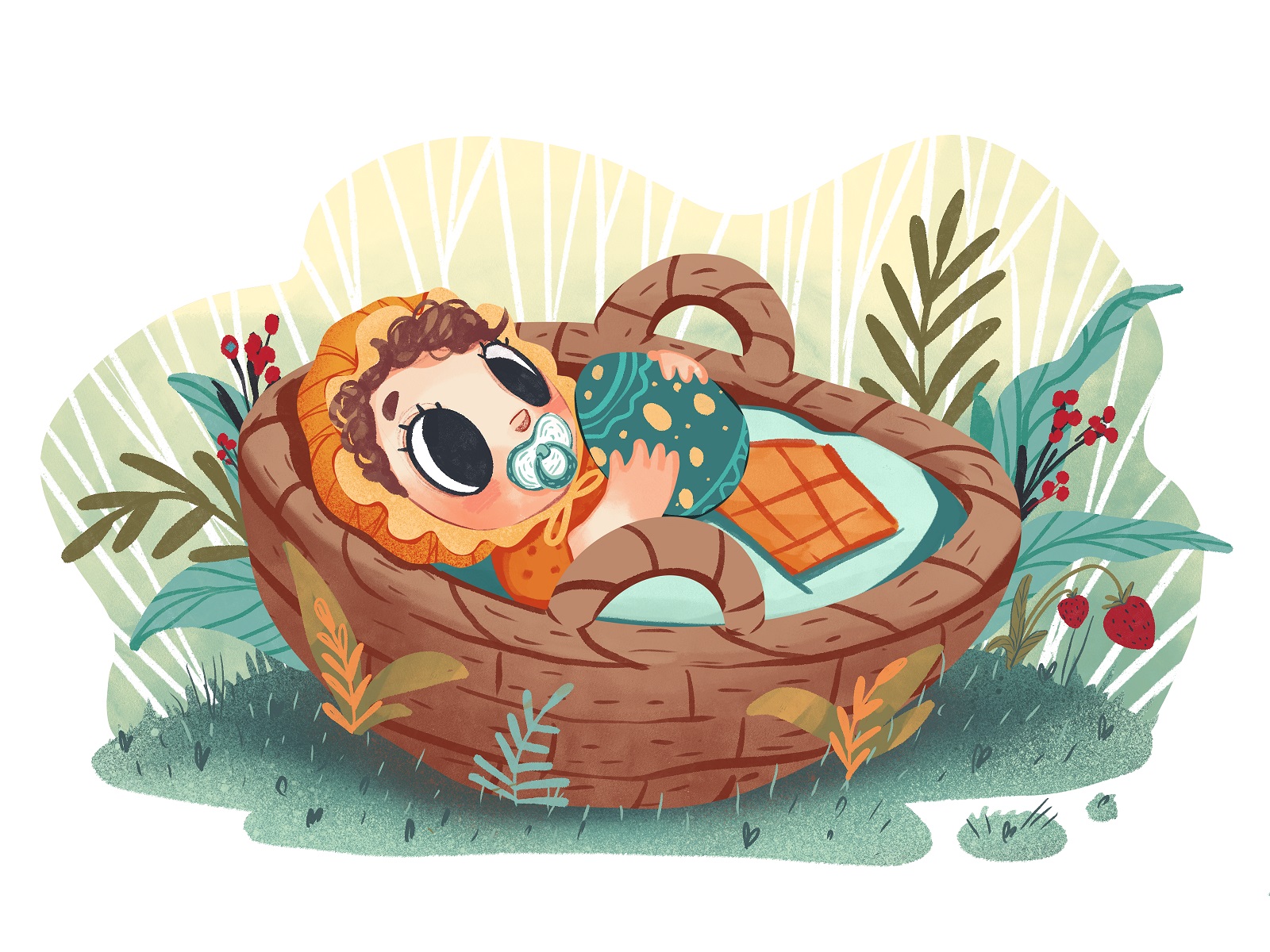
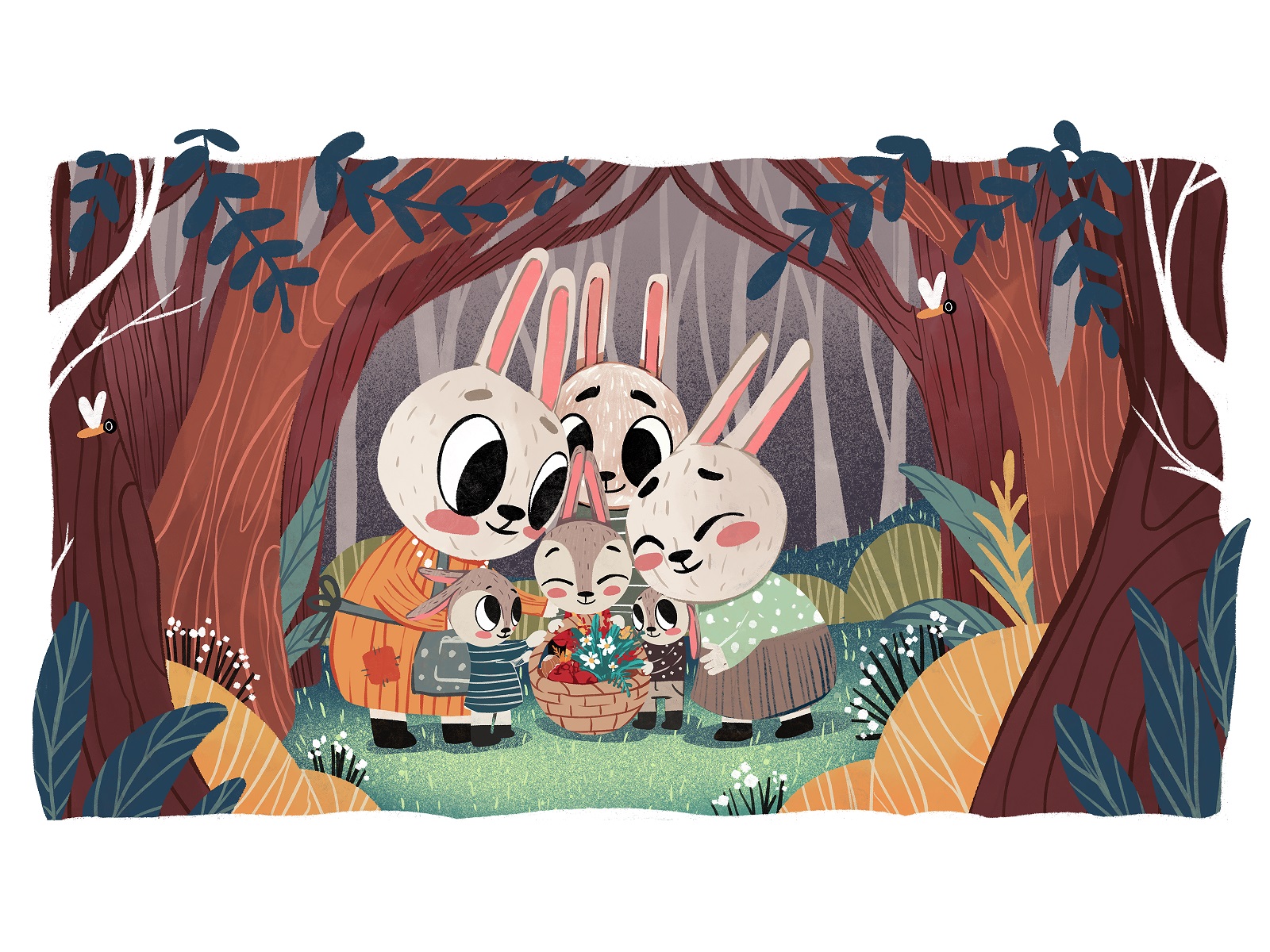
This one started as a side project. We wanted to practice narrative pacing for young readers. Easter gave us a frame—renewal, kindness, small rituals.
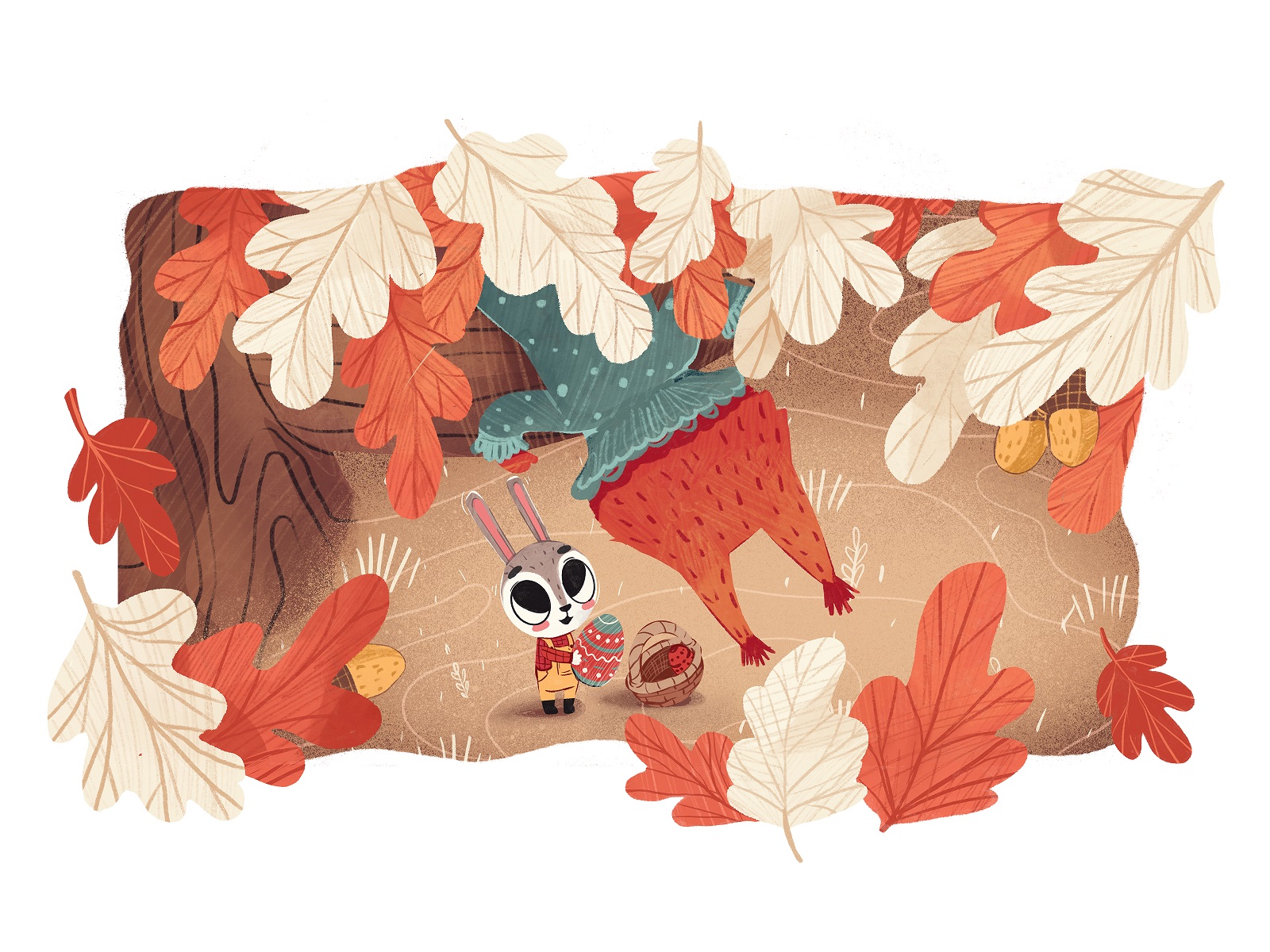
The protagonist, a Little Bunny, feels simple on paper. Anthropomorphic, yes, but not turned into a plush toy caricature. We kept the anatomy believable: weight in the hind legs, ears that react subtly to emotion. When the basket of eggs gets scattered in the forest, the stakes are modest. No dragons, no catastrophes, just a task and a choice.
He shares the eggs along the way. Returns home with none. Comes back with something else—new friends. The moral is gentle. We don’t underline it.
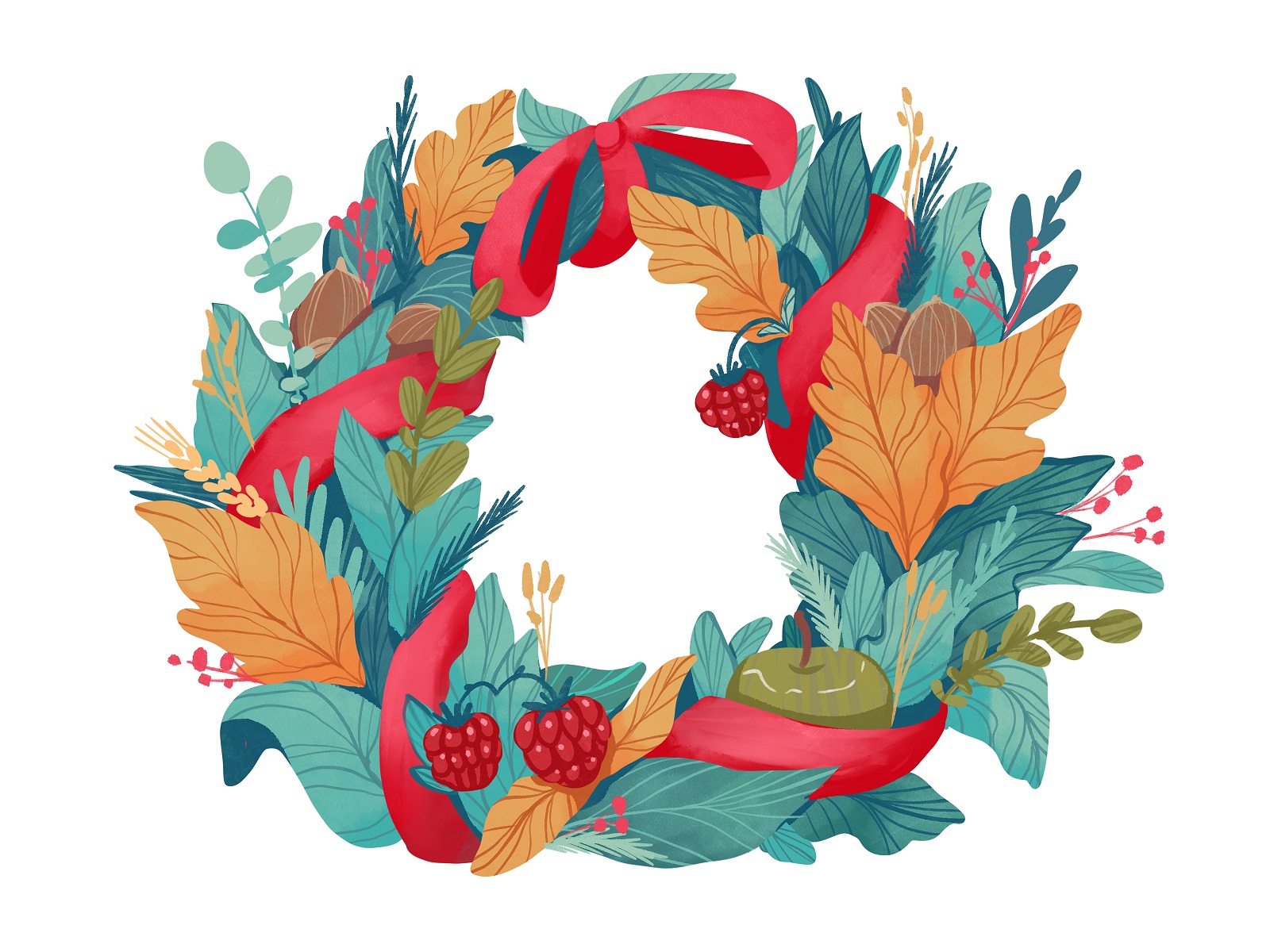
The color palette lives in spring woods: muted greens, soft browns, quiet yellows. Think of damp soil after snow melts. Think of wooden fences weathered by time. No sharp neon tones. We wanted the world to feel breathable.
We spent time on expressions. A slight tilt of the head before offering an egg. A fox’s cautious look shifting into gratitude. These micro-moments carry the story more than any caption could.
Details create continuity. The same mushrooms appear across spreads. A beetle crosses scenes like a silent witness. Children notice these things. They look for patterns. It makes the world feel real.
Check the project on Behance and join the discussion.
Case 2: Forest Friends Fairytale
The second story also unfolds in a forest, but the tone shifts. Human children enter with “superpowers”—small abilities they use to help the animals around them.
Here, the palette warms. Honey yellows. Toasted browns. Greens that feel sunlit rather than damp. The atmosphere is communal, almost festive.
Recurring characters—two rabbits—appear across spreads. Sometimes central, sometimes in the background. They act like visual glue, connecting scenes without formal chapter breaks. Repetition builds familiarity. Familiarity builds trust.
Composition becomes more dynamic. Diagonals guide the eye, characters move across the page rather than posing in the center. We think about how a child holds a book at bedtime, one hand slightly slipping down the page. The flow has to work in that physical reality.
Small textures matter. Mud on boots. Bent grass under a step. A hedgehog’s quills softening in a hug. These aren’t ornamental touches. They signal that the world has weight.
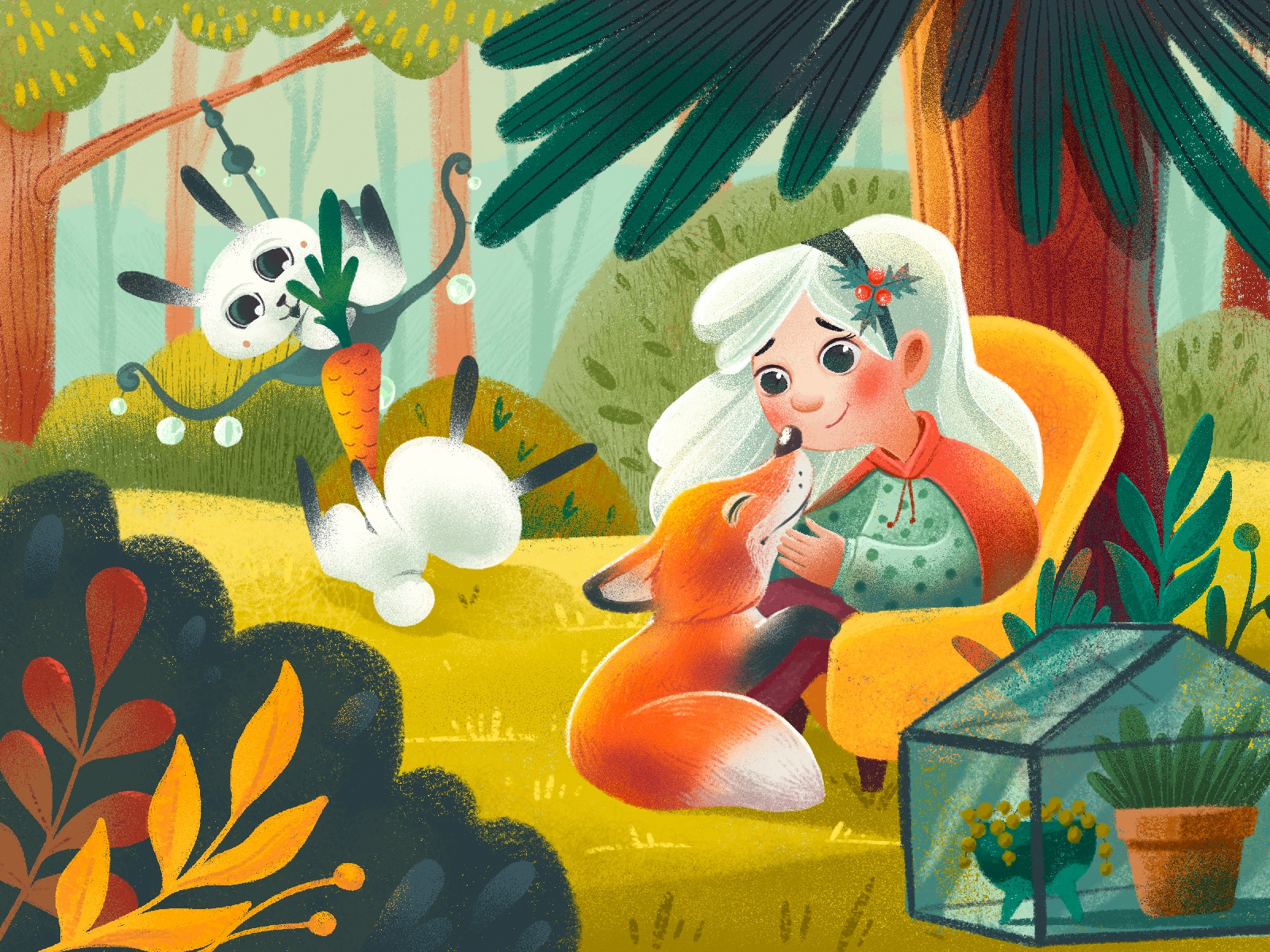
Plant and animal carer
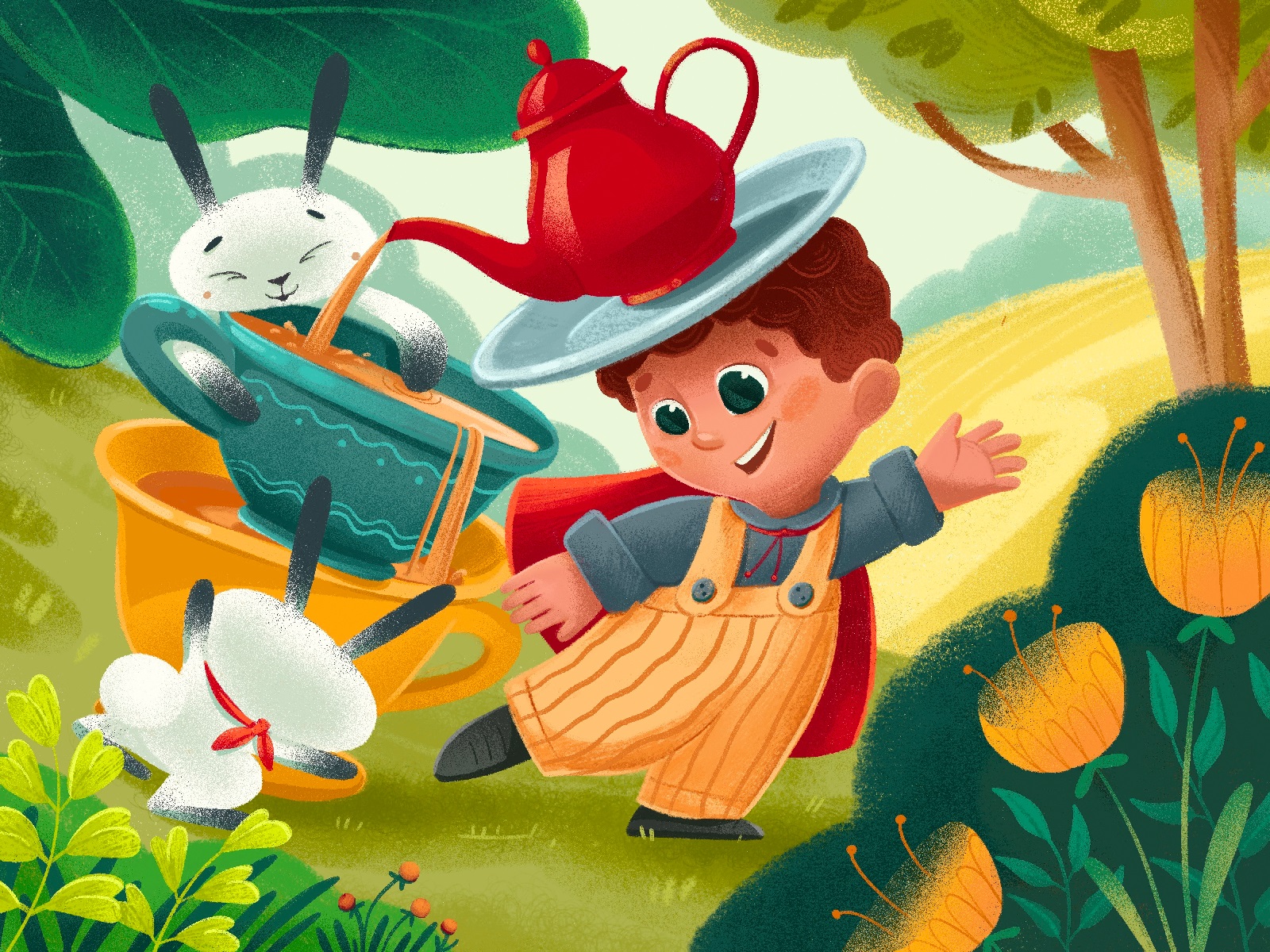
Party master
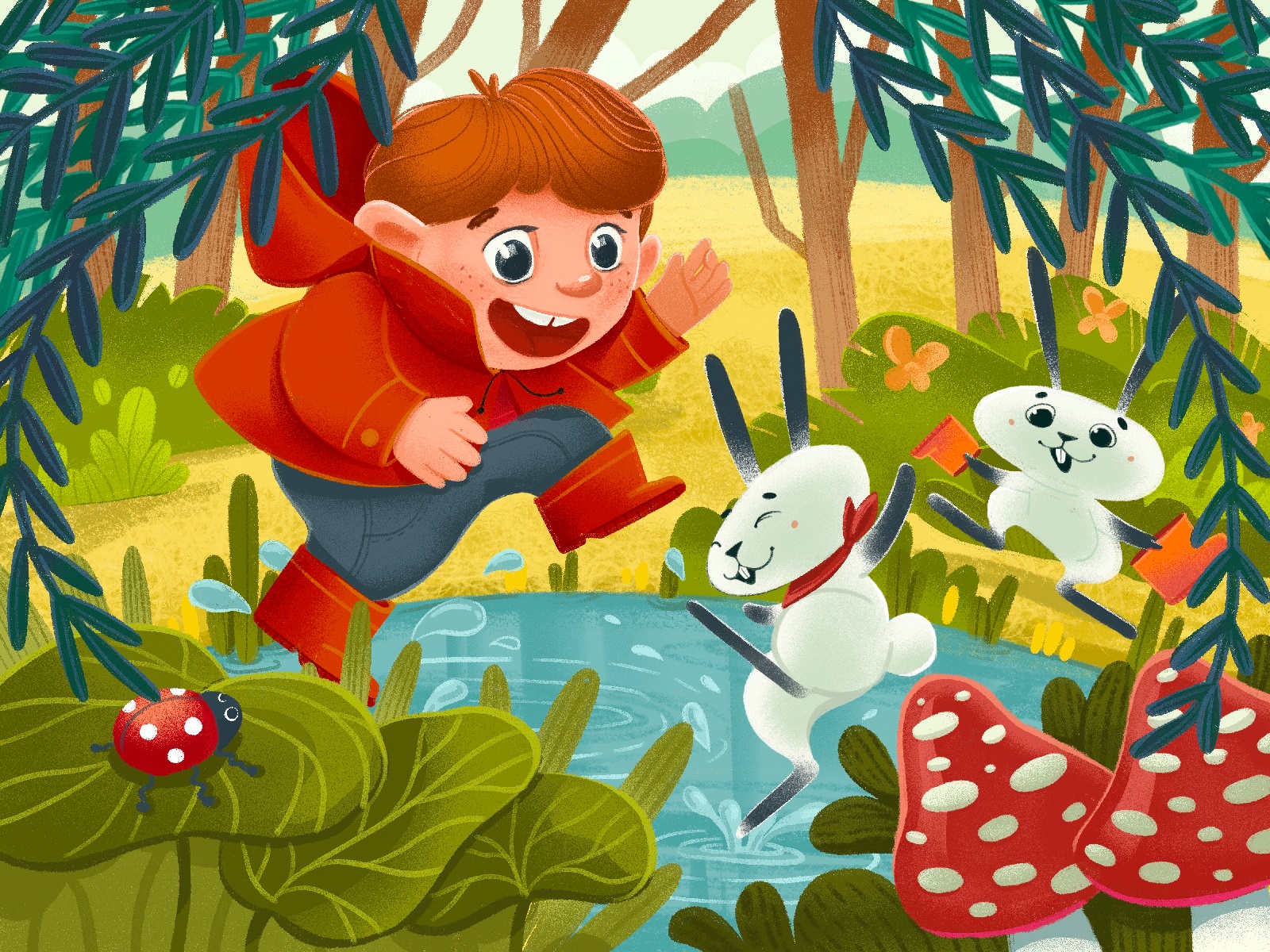
Funny walker
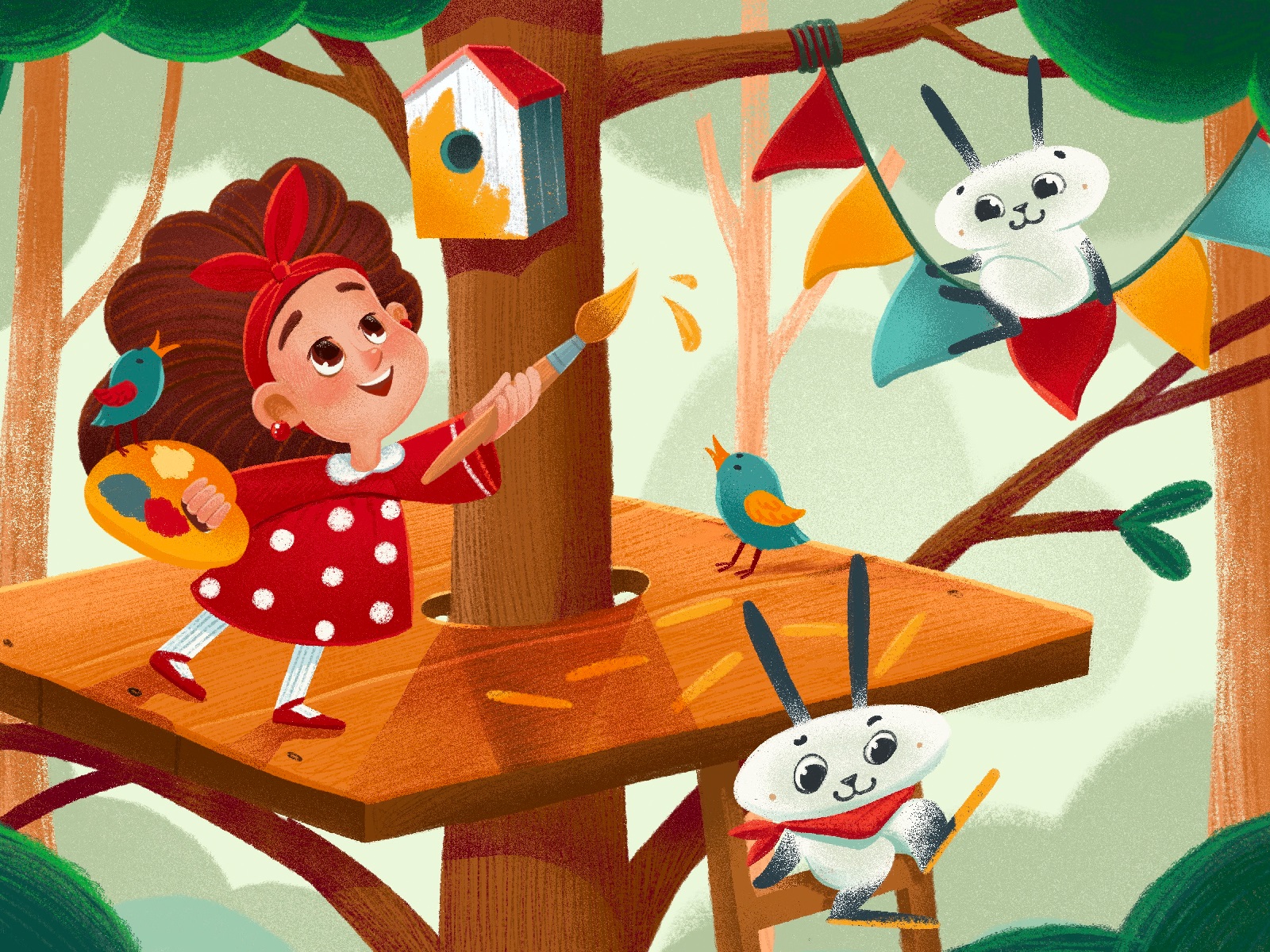
Little artist
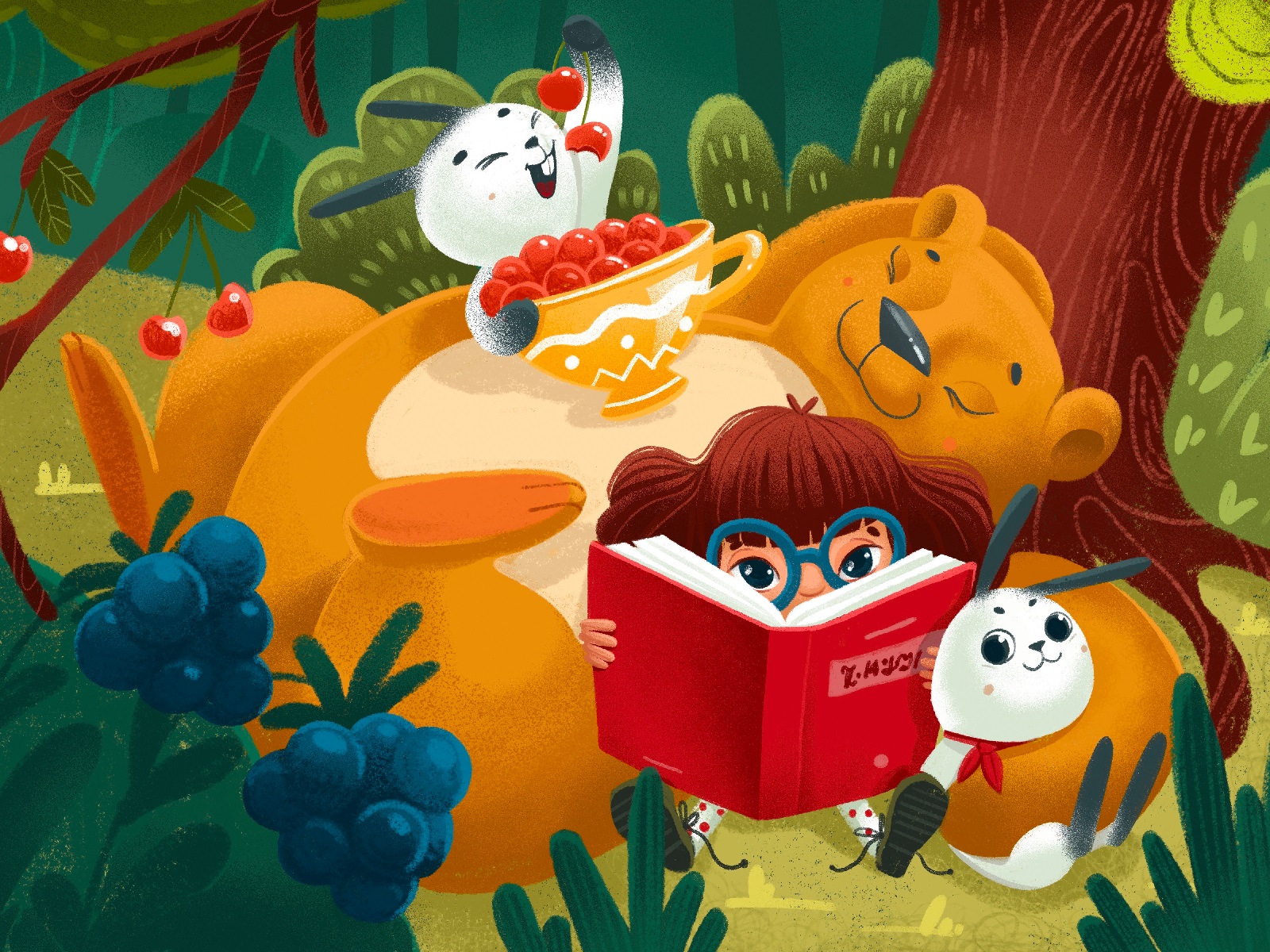
Little bookworm
Case 3: Nature Wonderland
The third project leans into scale. Giant animals share space with small humans. Not in a threatening way, but in coexistence.
Scale becomes narrative. A bird large enough to cast shade over a picnic. An insect whose wing fills a spread. We exaggerate carefully. Even the most fantastical proportions follow internal logic. If a creature is enormous, the shadows must behave accordingly. The ground must react.
The color palette opens up—brighter contrasts, clearer accents—yet we keep areas of calm so the eye can rest. Children don’t process chaos well. They wander through an image. They need space to wander.
Texture becomes emotional. Fur is rendered to feel soft. Feathers catch light differently at the edges. We think about tactility—how to suggest softness on flat paper. If a child feels the urge to touch the page, we’ve done something right.
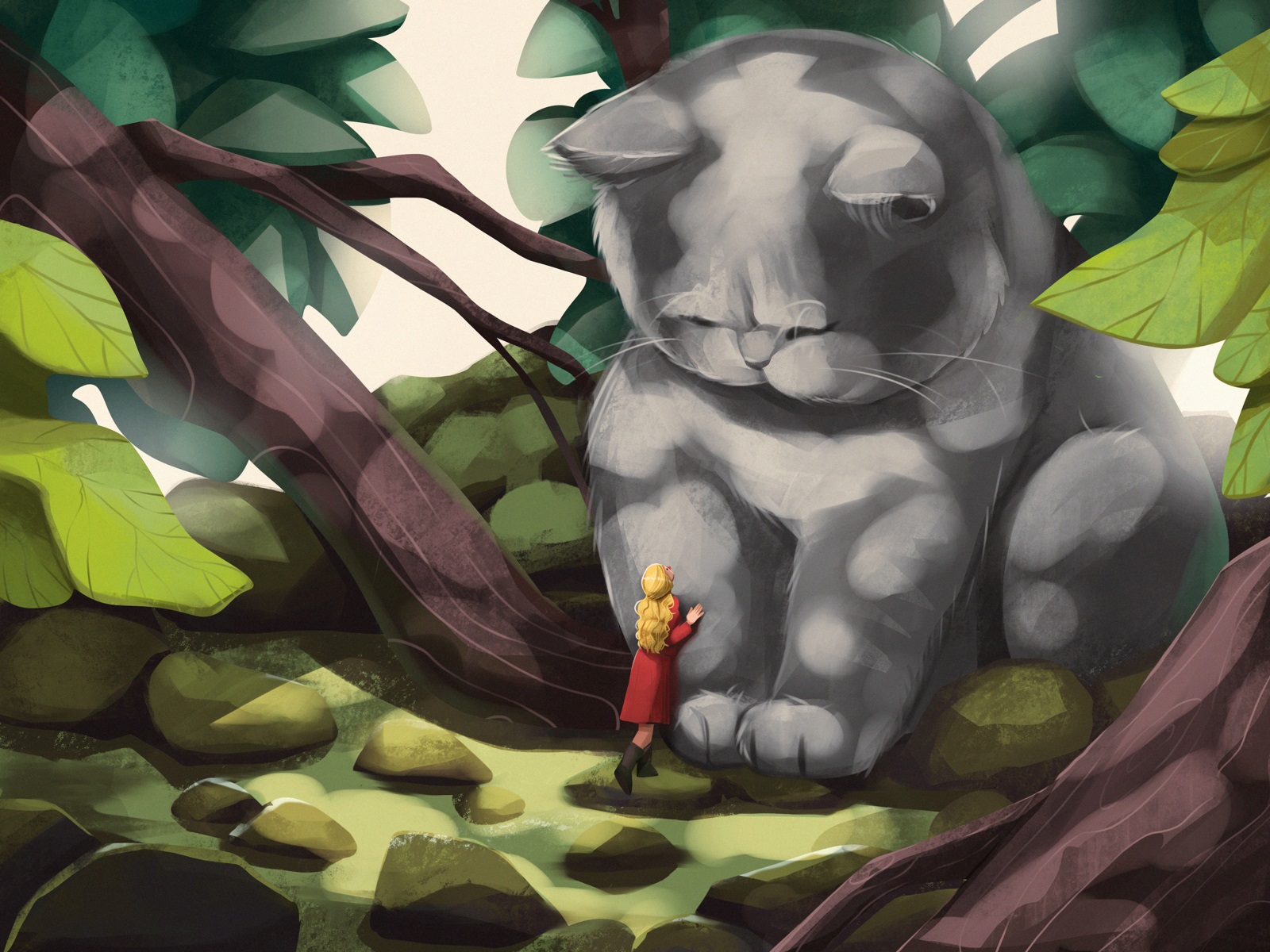
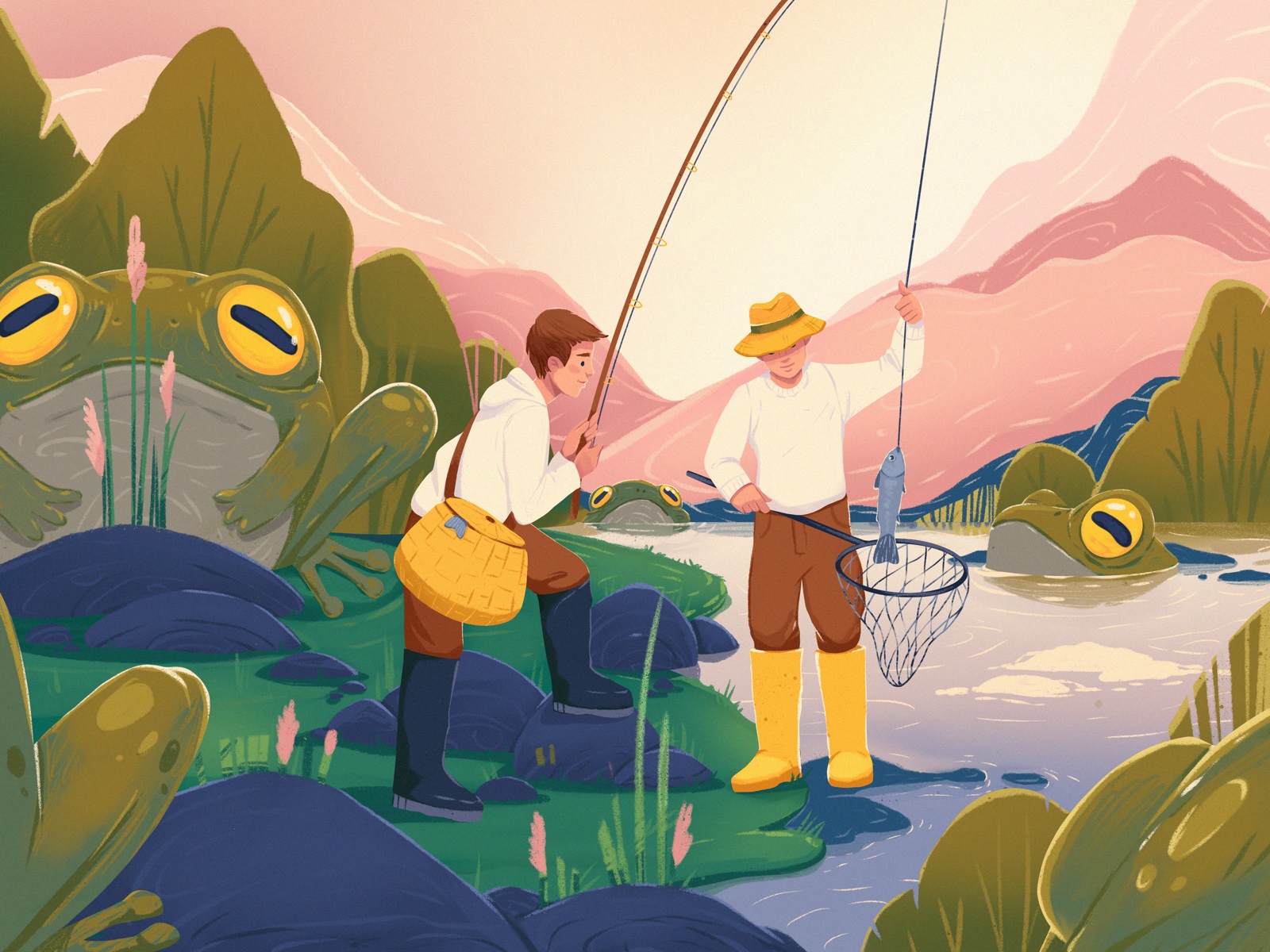
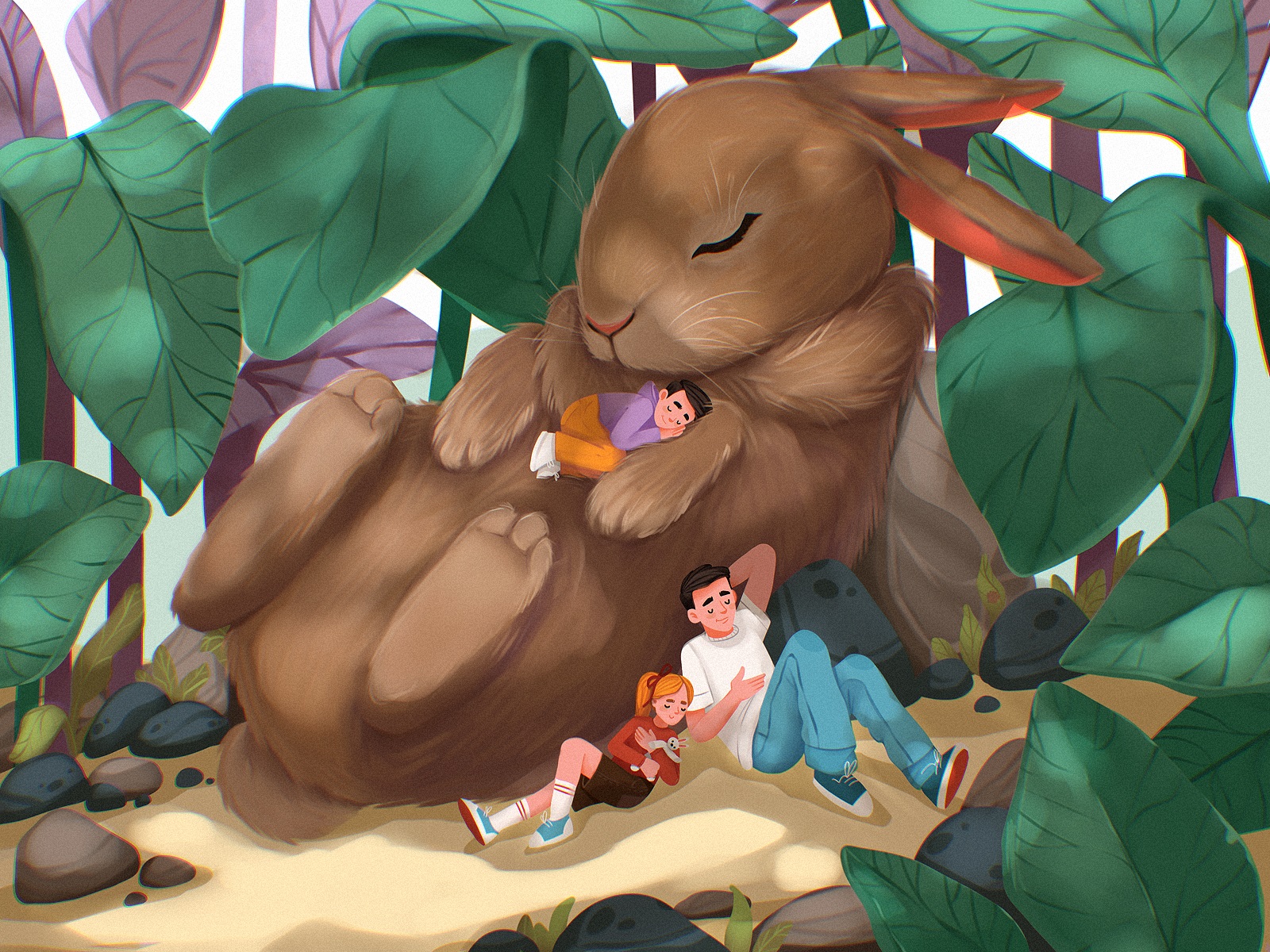
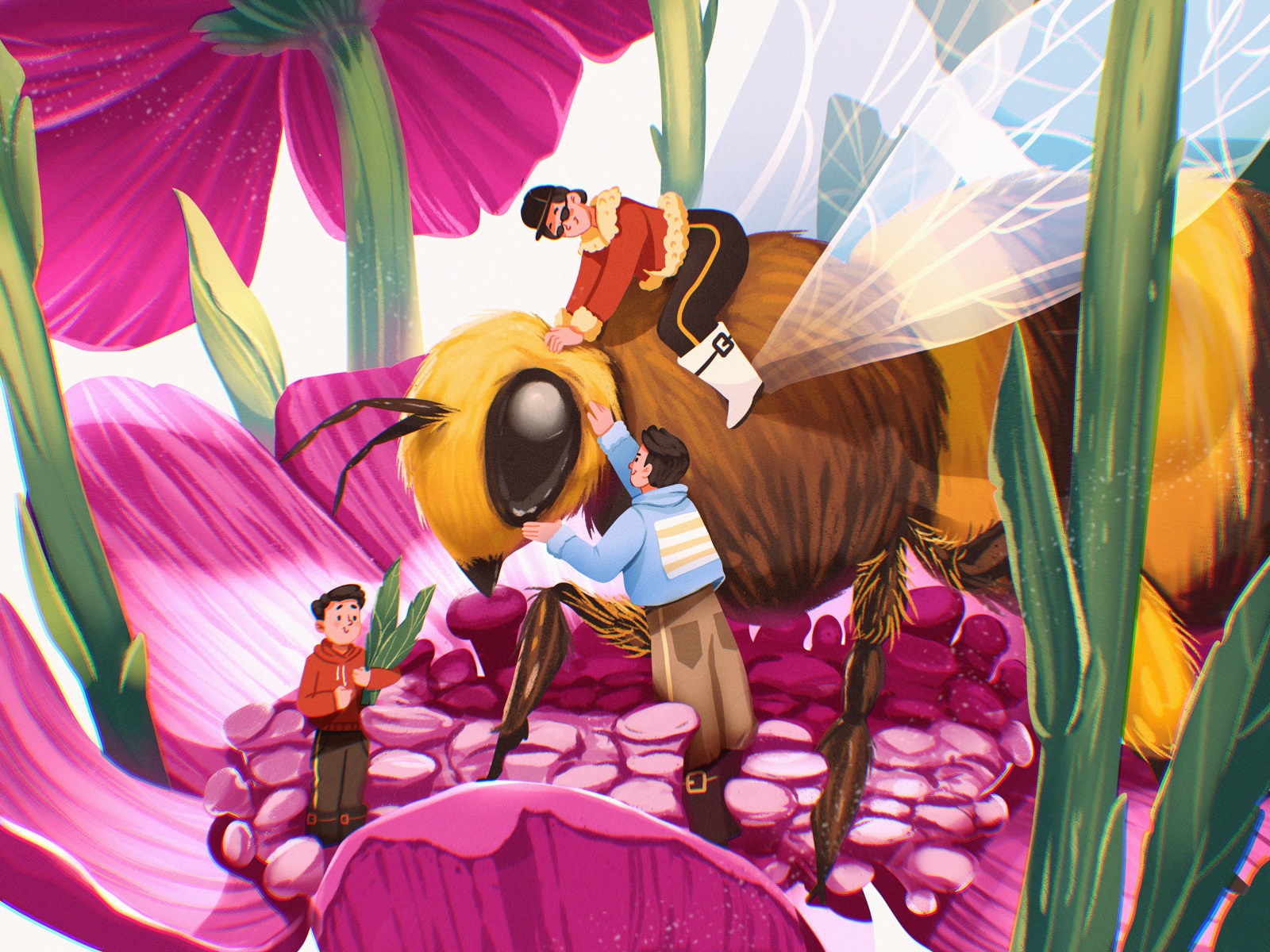
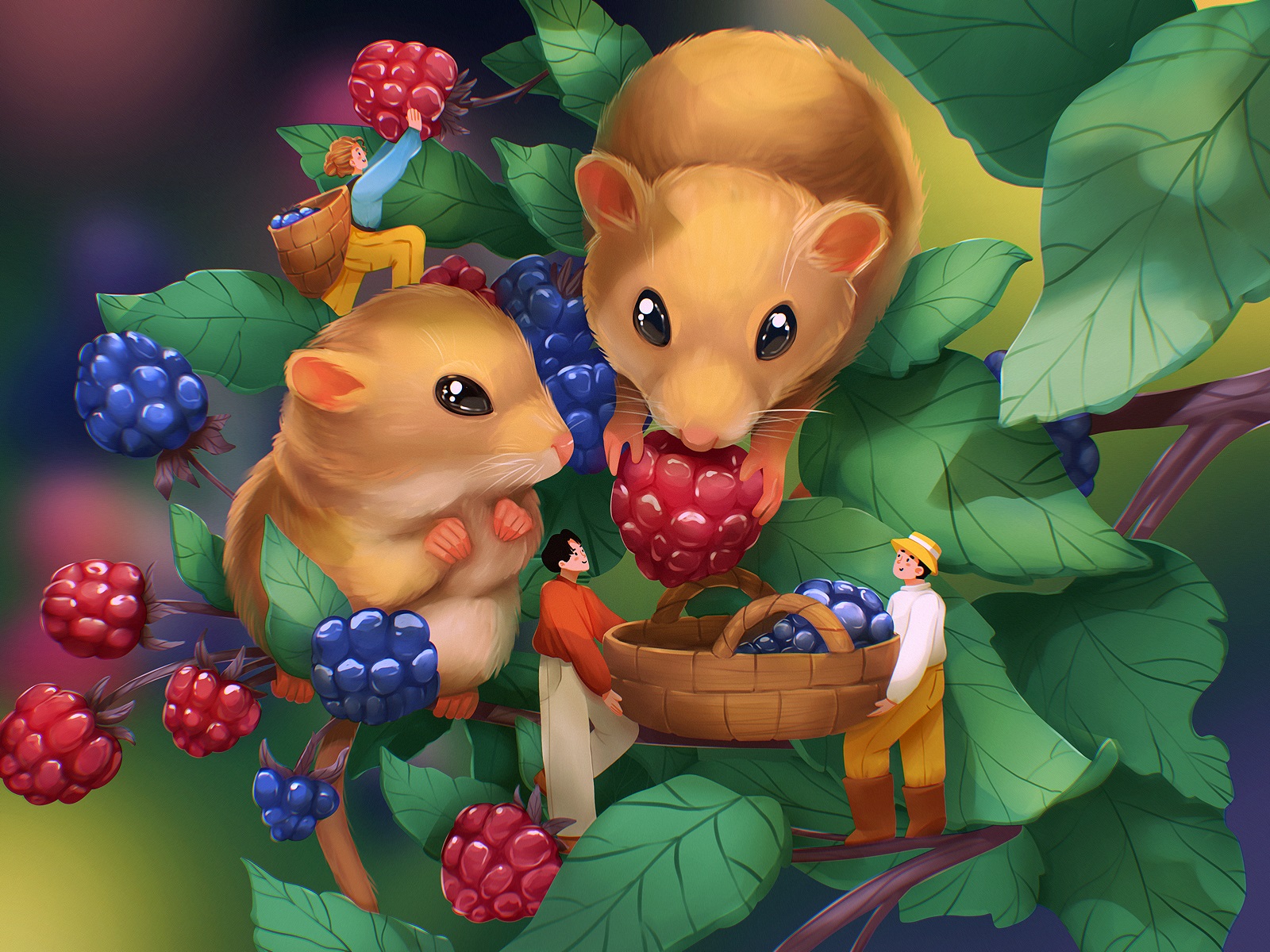
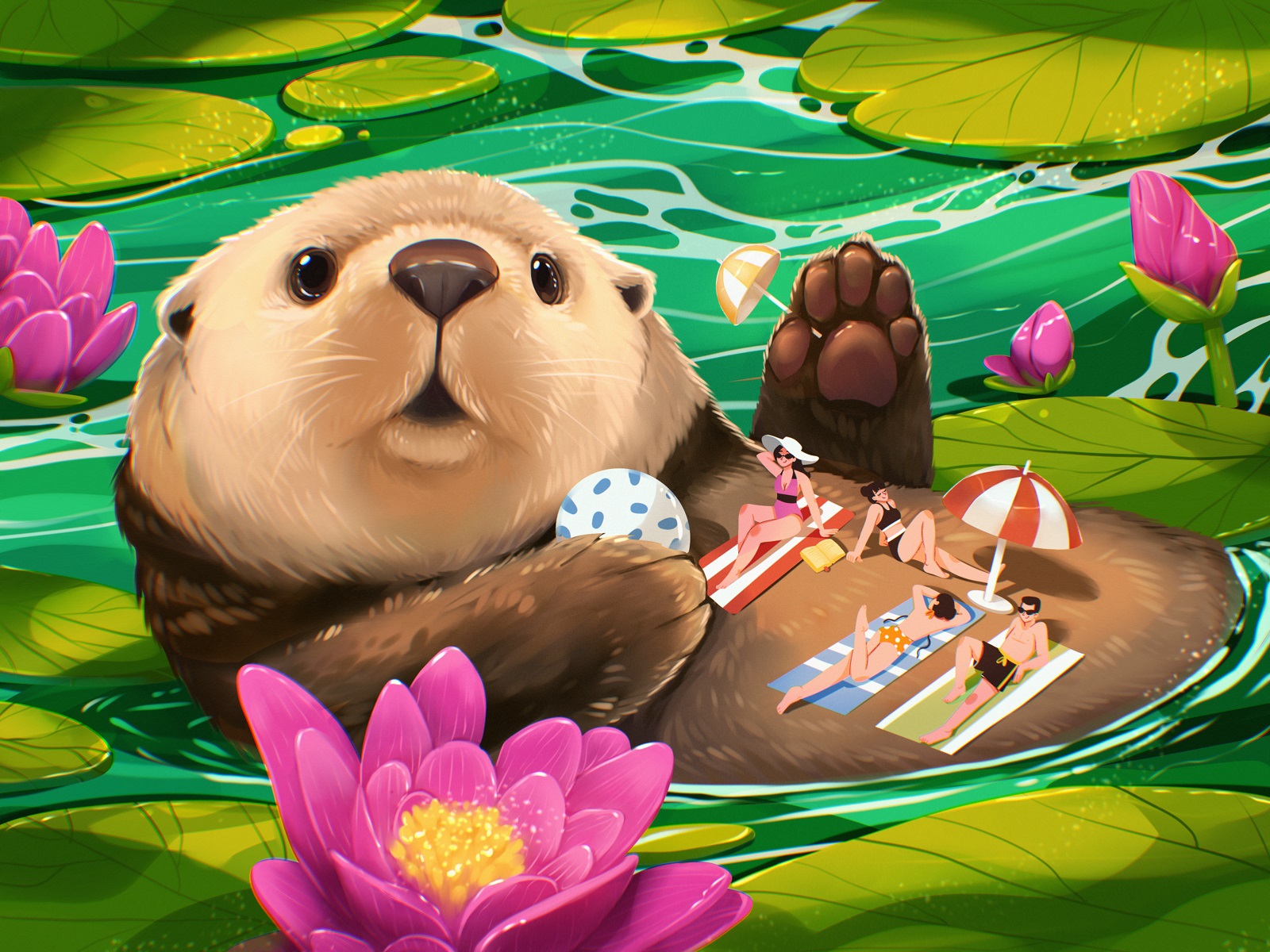
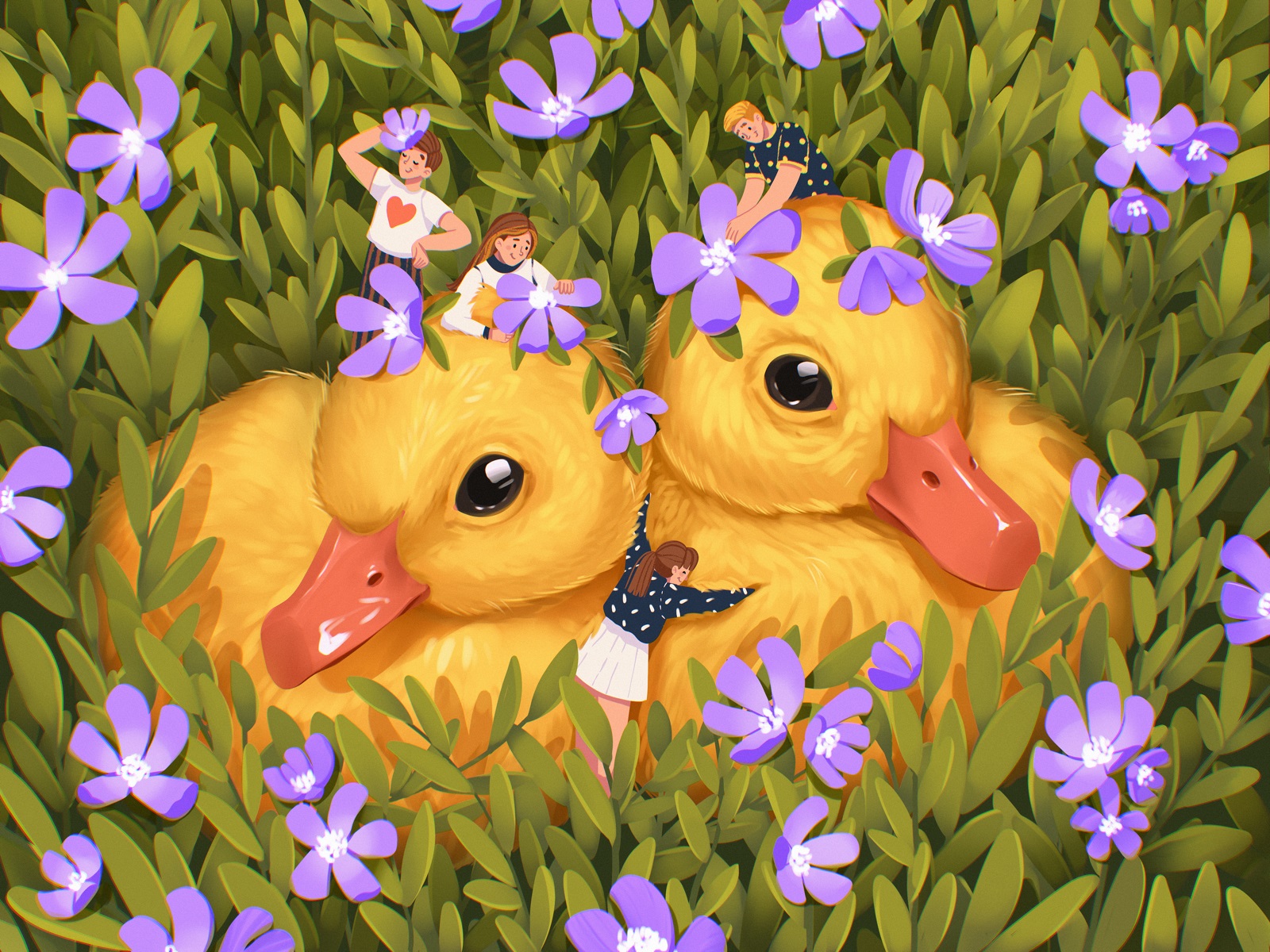
Check the project on Behance and join the discussion
What These Projects Taught Us
Working on children’s books strips away pretense. There’s no hiding behind clever references or stylistic tricks that only adults will decode. If something doesn’t feel true, it shows immediately.
And when it works, it works quietly. A child lingers on a background detail. They trace a giant animal with their finger. They return to a page not because they were told to, but because something in it feels alive.
That’s the part that stays with us. Not the likes or the awards. The idea that somewhere, in a small room with a lamp on and a blanket half-slipped to the floor, a world we drew is being entered, explored, and believed in—fully.
Recommended Reading
Curious how design decisions shape emotion beyond illustration? Explore more of our reflections on storytelling, character design, and the craft behind meaningful visual worlds.
45 Inspiring Illustrations About Workspaces, Creativity and Art
Animal World: 4 Beautiful Illustration Sets About Wildlife and Pets
Life in Pandemic Times: Theme Illustrations and Graphic Design Project
In Search of Illustration: Design Process for Illustration Set
20+ Atmospheric Digital Illustrations: From Landscapes to City Views
ABUK. Custom Book Cover Design for Audiobook App
Moonworkers. Digital Illustrations on Film Production
MYWONY. Storytelling with Brand Intro Design